








New Glass Technique
Home /
the12volt's Install Bay /
Fiberglass, Fabrication, and Interiors / New Glass Technique ( Topic Closed)
Topic Closed) Members
 Search
 Register
 Login
Login


Posted: April 15, 2013 at 6:36 PM / IP Logged


Posted: April 15, 2013 at 7:03 PM / IP Logged
Posted: April 15, 2013 at 7:10 PM / IP Logged
Posted: April 15, 2013 at 8:58 PM / IP Logged
Posted: April 15, 2013 at 9:11 PM / IP Logged

Posted: April 24, 2013 at 10:42 AM / IP Logged
Posted: May 11, 2013 at 12:28 AM / IP Logged
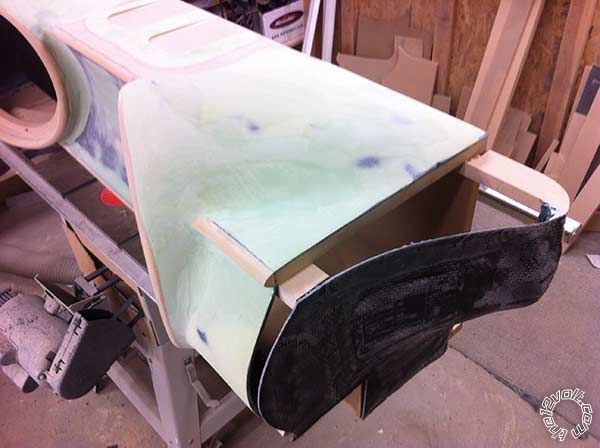
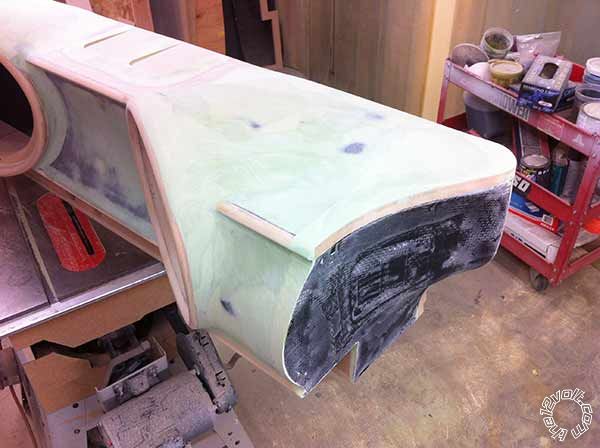
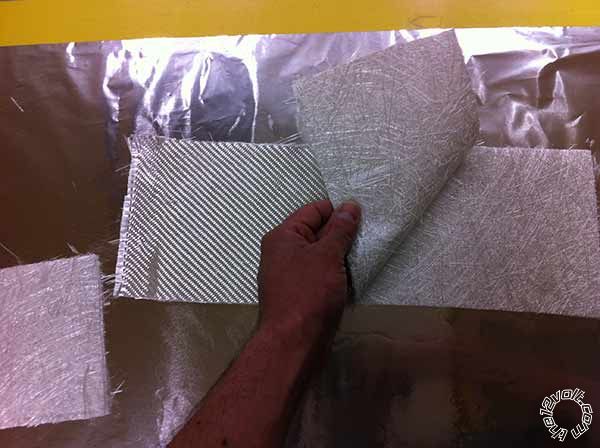 Yes I remove the chip board. I tape and wax the chip board before I lay glass on it. I then bond the glass back onto my project. My projects are much lighter weight and much stronger than you will typically find in the car audio world.
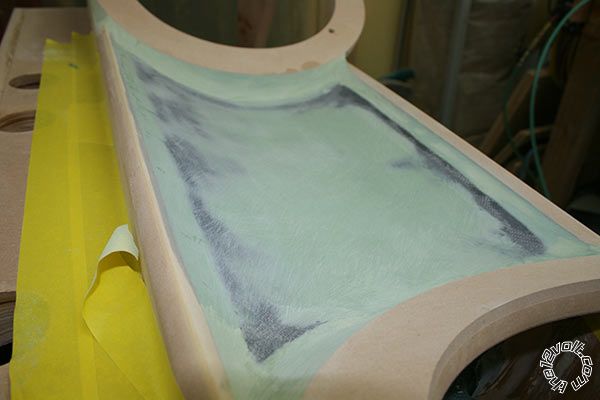
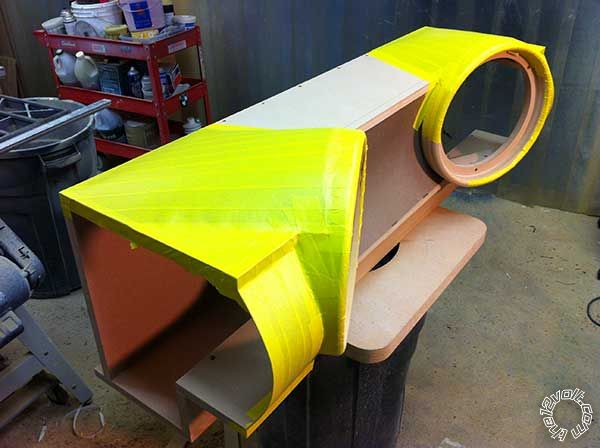 This technique saves you time sanding. Because the glass is preformed and rolled smooth. The final layup requires much much less body filler and consequently sanding. As an added benefit the project has dimensional stability. It won't warp in the sun and there is not much filler on it so it won't shrink and show sand lines through the paint work a couple of months down the road.
Posted: May 11, 2013 at 12:28 AM / IP Logged
Sorry, you can NOT post a reply.
This topic is closed.
 Printable version
| You cannot post new topics in this forum You cannot reply to topics in this forum You cannot delete your posts in this forum You cannot edit your posts in this forum You cannot create polls in this forum You cannot vote in polls in this forum |

| Search the12volt.com |
Follow the12volt.com 
Thursday, April 30, 2026 • Copyright © 1999-2026 the12volt.com, All Rights Reserved • Privacy Policy & Use of Cookies

Thursday, April 30, 2026 • Copyright © 1999-2026 the12volt.com, All Rights Reserved • Privacy Policy & Use of Cookies
Disclaimer:
*All information on this site ( the12volt.com ) is provided "as is" without any warranty of any kind, either expressed or implied, including but not limited to fitness for a particular use. Any user assumes the entire risk as to the accuracy and use of this information. Please
verify all wire colors and diagrams before applying any information.